1788564371293132
top of page

Naked and Unashamed: 
A Marriage Course on Sexual Intimacy

HOW TO TAKE THIS COURSE: Work through one module per week. Watch the video first — then sit down together and complete the worksheet before moving on. Ground Rules No blame. No defensiveness. Listen to understand — not to respond. Write everything down. The breakthrough is in the work. After Each Module Sign the Covenant Commitment before moving to the next module. After you've completed the course: Book a coaching session at MrMarriage.com and keep your Marriage Covenant somewhere visible. One module. One week. One marriage transformed.

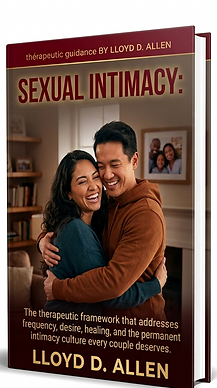
Naked_Unashamed_Ebook_Cover (1).png

God celebrates physical intimacy in marriage. This comprehensive course teaches you how to create a fulfilling intimate life—honestly, openly, and biblically. Explore passion, pleasure, and deep physical connection in a safe, judgment-free environment designed for married couples. Let's begin.

Understanding Sexual Intimacy

HOW TO TAKE THIS COURSE: God celebrates physical intimacy in marriage. This comprehensive course teaches you how to create a fulfilling intimate life

Untitled design (7).png

Expectation

A leading cause of divorce

Everybody enters marriage with expectations. These expectations are hidden rules that form our reality of how a marriage should function. These expectations are usually unconscious (hidden) rules that we expect our partner to comply with.

Untitled design (7).png

Expectation

A leading cause of divorce

Everybody enters marriage with expectations. These expectations are hidden rules that form our reality of how a marriage should function. These expectations are usually unconscious (hidden) rules that we expect our partner to comply with.

Untitled design (7).png

Meet the author

Turquoise and White Simple Quote Instagram Post (2).png

Lloyd Allen is a Marriage educator, Therapist and Coach. He is also a Theologian, Author, and Speaker, and the Founder and CEO of Fixing Marriages Academy, Inc. Trained as a Marriage and Family Therapist at Barry University, with honors, Lloyd brings 30 years of experience helping couples around the world repair, restore, and rebuild their marriages. Happily married and the father of two, Lloyd's greatest passion is helping you build a happy, loving marriage that lasts.

Untitled design (7).png

HOW TO TAKE THIS COURSE

HOW TO TAKE THIS COURSE: NAKED AND UNASHAMED • A MARRIAGE COURSE How to Use This Course 1. Watch the videos. Each module has a companion video teaching. Watch the video for the module first. It sets the context, names the dynamics, and prepares you for the written content and the worksheet. 2. Read each module. The module content in this ebook expands and deepens the video teaching. Reading it after watching the video reinforces the framework and prepares both spouses for the worksheet. 3. Download the worksheet. Each module has a companion worksheet available for download at MrMarriage.com. Print two copies — one for each spouse. The worksheet is where the real work happens. 4. Complete worksheets privately before sharing. Both spouses complete their answers individually before reading them to each other. The private completion produces honest answers. The sharing produces a connection. 5. Do not rush. Work through one module at a time. A couple who completes one module per week will finish the course in eleven weeks, having done more honest relational work than most couples do in eleven years. 6. Return to the worksheets. The commitments made at the end of each worksheet are worth returning to. Date them. Review them. Hold each other to them. The practices built here are meant to outlast the curriculum. 7. Get professional support where needed. Several modules address dynamics — betrayal trauma, sexual shutdown, pornography, chronic low libido — that may require professional therapeutic support. Where a module raises something that exceeds what a worksheet can address, pursue help. “A couple who completes one module per week will finish in eleven weeks, having done more honest relational work than most couples do in eleven years.”

Printable Document (PDF)

Untitled design (7).png

MODULE 1 — The Theology of Sexual Intimacy

Why sex in marriage is not a concession to the flesh — it is a covenant act designed by God to mirror the union between Christ and the Church.

MODULE 1: THE THEOLOGY OF SEXUAL INTIMACY Why Sex in Marriage Is Not a Concession to the Flesh — It Is a Covenant Act Designed by God The church has been largely silent about sex in marriage — and that silence has been expensive. Not silent about sex before marriage. What it has refused to address is sex within marriage — what it is for, what it means, and what God actually intended when He designed it. The result is a generation of married Christians who received a clear theology of sexual abstinence and almost no theology of sexual intimacy. KEY CONCEPTS The church communicated shame around sexuality rather than the theology Scripture provides. Most Christian married adults report their primary sexual education from the church was a list of prohibitions. What was prohibited before marriage was never reframed as celebrated within it. Song of Solomon is not an allegory — it is an explicit celebration of erotic love between a husband and wife. God did not include it by accident. He included it to demonstrate that the erotic dimension of marriage is something He authored, celebrated, and preserved in His Word. Sex in marriage serves three distinct biblical purposes — procreation, pleasure, and covenant renewal. Most couples have been taught only the first. Every act of sexual intimacy is a re-enactment of the covenant made before God at the altar. The husband's body belongs to his wife and the wife's body belongs to her husband. Neither spouse holds unilateral authority over the sexual domain. This is not a negotiation. It is a covenant transfer that happened at the wedding. Withholding sex from a spouse is a spiritual act, not merely a relational one. Paul frames sexual deprivation in 1 Corinthians 7:5 as an opening for satanic attack — the sexual domain carries spiritual weight most couples have never been taught to recognize. BIOLOGICAL AND PSYCHOLOGICAL Research consistently shows sexual satisfaction is one of the strongest predictors of overall marital satisfaction. The Gottman Institute identifies sexual dissatisfaction as one of the top three predictors of divorce. The issue is rarely physical incompatibility — it is almost always the accumulated weight of shame, silence, and unmet expectation. Couples who regard sexual intimacy as sacred rather than suspect consistently report better outcomes across every dimension of marital health. THEOLOGICAL Genesis 2:24-25 establishes nakedness without shame as the original design. Adam and Eve stood before each other in complete transparency and experienced no shame. That was not a pre-Fall anomaly — that was the design. The Fall introduced shame into the sexual domain. The covenant of marriage is the only institution God designated as the place where that shame is fully removed — not managed, not minimized, but designed out. Every act of married sexual intimacy is a reclamation of Eden. EXAMPLE Marcus and Diane had been married six years before they took this course. They had never spoken openly about their sexual relationship — not because they did not care, but because neither had been given the language or the permission. When Marcus read that Song of Solomon was God's deliberate celebration of erotic love in marriage, he sat quietly for a long time. Diane said it was the first time she understood that what happened between them was not something God merely allowed. It was something He designed and called good.

Untitled design (7).png

MODULE 2 — The Frequency Problem

Why couples stop having sex is rarely about sex — it is about everything that sex requires that has quietly broken down.

MODULE 2: THE FREQUENCY PROBLEM Why Couples Stop Having Sex Is Rarely About Sex — It Is About Everything That Sex Requires That Has Quietly Broken Down Frequency decline is almost never about physical attraction. It is about unresolved emotional distance, accumulated resentment, and the unspoken conclusion that vulnerability is no longer safe with this person. The body does not lie. When a spouse consistently avoids sexual intimacy, they are making a statement about the emotional state of the marriage. The tragedy is that the statement is almost never spoken out loud — so the other spouse is left to interpret it in the worst possible way. KEY CONCEPTS - Frequency decline is about emotional distance, not physical attraction. Couples who are highly connected emotionally find time and energy for sex. Couples who are disconnected find reasons not to. - Exhaustion is real but it is also a symptom. What we make time for reveals what we believe matters. A marriage where sex has quietly stopped has decided — consciously or not — that the covenant bond is less urgent than everything competing for the same hours. - Body image is one of the most underreported drivers of low-frequency marriages. Shame about physical changes after pregnancy, aging, or weight produces withdrawal that looks like low desire but is actually fear of being seen. - The spouse with higher desire almost always personalizes the decline — interpreting withdrawal as rejection, unattractiveness, or evidence of a failing marriage. This interpretation is almost never accurate and almost always devastating. - Most couples never have a direct conversation about sexual frequency. They negotiate it silently through pursuit, avoidance, and resentment — which guarantees the problem deepens. BIOLOGICAL AND PSYCHOLOGICAL Gottman's research identifies sexual dissatisfaction as one of the top three predictors of divorce. The couples most at risk are not those who fight about sex — they are the ones who stopped talking about it entirely. Research on sexual communication consistently shows that the ability to speak directly and kindly about sexual needs is a stronger predictor of satisfaction than frequency, compatibility, or physical attraction. The problem is almost never biological. It is almost always relational — and relational problems respond to relational interventions, which begin with honest conversation. THEOLOGICAL 1 Corinthians 7:3-5 does not suggest that spouses meet each other's needs — it commands it, using the language of debt and obligation. Paul's framework is not romantic — it is covenantal. Frequency is not a preference to be negotiated; it is a covenant responsibility to be honored. His specific warning about deprivation giving Satan an opportunity is a theological claim that the sexual domain of marriage carries spiritual vulnerability — and that neglecting it has consequences that extend well beyond the bedroom and into the spiritual health of both spouses. EXAMPLE Marcus had stopped initiating after Diane declined him consistently for three months. He told himself he was being respectful. What he was actually doing was protecting himself from further rejection. Diane assumed his silence meant he had lost interest. Neither said a word. Eight months passed. By the time they finally spoke, both had drawn conclusions about the marriage that were entirely wrong — and entirely avoidable. One honest conversation would have ended what eight months of silence had built.

Untitled design (7).png

MODULE 3 — His Needs, Her Needs: The Design Difference

The most common source of sexual frustration in marriage is not incompatibility — it is the failure to understand that men and women were designed with fundamentally different pathways to intimacy.

MODULE 3: HIS NEEDS, HER NEEDS — THE DESIGN DIFFERENCE The Most Common Source of Sexual Frustration in Marriage Is Not Incompatibility — It Is the Failure to Understand That Men and Women Were Designed With Fundamentally Different Pathways to Intimacy Men and women do not arrive at sexual intimacy the same way. He is wired for physical connection first. She is wired for emotional safety first. Neither is wrong. Neither is broken. But when two people operate from different designs without a shared understanding of what the other person actually needs, the result is a predictable and destructive cycle that neither spouse has the language to interrupt. KEY CONCEPTS - Men are primarily aroused visually and physically. Desire often precedes emotional connection. For most husbands, sex is how he gets close — not evidence that closeness is all he wants. When a wife interprets his pursuit as shallow, she has misread the signal entirely. - Women are primarily aroused contextually and emotionally. Desire follows safety, attunement, and felt appreciation. A wife who feels unseen, criticized, or emotionally alone will almost always find desire elusive regardless of physical attraction. - This design difference creates a predictable cycle. He pursues sex to feel connected. She needs connection before sex is possible. He feels rejected. She feels used. Both withdraw. Neither is wrong — both are simply speaking a language the other was never taught to hear. - The husband who understands his wife's design treats the entire day as foreplay. How he speaks to her, serves her, and sees her builds the emotional conditions that make her desire possible. The bedroom is not where the work happens — it is where the work pays off. - The wife who understands her husband's design stops interpreting his pursuit as shallow and receives it as his primary language of love and vulnerability. She responds to the longing, even when she cannot immediately respond to the request. BIOLOGICAL AND PSYCHOLOGICAL Rosemary Basson's research on female sexual response demonstrates that women frequently experience responsive rather than spontaneous desire — meaning arousal follows stimulation and safety rather than preceding it. This is not dysfunction. It is design. Husbands who understand this stop waiting for their wives to initiate and start creating the conditions that make desire possible. When wives feel emotionally safe, their sexual responsiveness increases dramatically — not because they forced themselves, but because the conditions for their design were met. THEOLOGICAL 1 Peter 3:7 commands the husband to dwell with his wife according to knowledge — the word translated knowledge carries the same root used for sexual intimacy throughout the Old Testament. To know your wife sexually is inseparable from knowing her as a person. The design difference is not a problem to be solved — it is an invitation to the kind of knowing that honors the covenant. A husband who refuses to understand how his wife's desire works is not only failing her relationally. He is failing a specific biblical command. EXAMPLE Marcus could not understand why Diane was never in the mood. He had been faithful, provided well, and kept himself in shape. What he had not done was come home and ask how she was feeling. Had noticed what she was carrying. Had served her without being asked. One evening he did all three — and said nothing about sex. Diane initiated that night for the first time in months. Marcus learned more about his wife's design in one evening than he had in seven years of marriage.

Untitled design (7).png

MODULE 4 — When She Has Shut Down

Female sexual shutdown is not stubbornness, low drive, or withholding — it is a protection response, and it will not reverse until its causes are addressed directly.

MODULE 4: WHEN SHE HAS SHUT DOWN Female Sexual Shutdown Is Not Stubbornness, Low Drive, or Withholding — It Is a Protection Response, and It Will Not Reverse Until Its Causes Are Addressed Directly Female sexual shutdown is not the problem. It is the signal. A wife in shutdown is not withholding sex. She is telling the truth about the emotional state of the marriage in the only language that finally got heard. Most husbands respond to shutdown by increasing pressure or withdrawing entirely. Both responses deepen the shutdown. Neither addresses its cause — and until the cause is addressed, nothing changes. KEY CONCEPTS - Sexual shutdown in women is almost always a symptom of something upstream. Emotional disconnection, unresolved conflict, feeling unseen or undervalued, or a history of feeling that sex is something done to her rather than with her — these are the actual problems. The shutdown is the signal, not the source. - Contempt is the single most reliable predictor of female sexual shutdown. When a wife feels criticized, dismissed, or disrespected consistently, her body will eventually refuse what her mind has not yet named. A wife who feels safe opens. A wife who feels threatened closes. It is not a decision — it is a physiological response. - Unaddressed sexual trauma is far more prevalent than either spouse typically acknowledges. One in four women has experienced sexual trauma before marriage. These experiences do not disappear at the altar — they arrive in the marriage bed and operate silently until they are named and addressed through appropriate care. - Many wives in shutdown tried to communicate what they needed and were dismissed. The shutdown was not her first response — it was her last one. Most husbands do not realize she told them. She told them differently, or earlier, or less clearly than they could hear — but she told them. - Recovery requires the husband to lead with sustained non-sexual affection. Physical warmth with no agenda, over a long enough period, that the wife's nervous system begins to relearn safety. One good week does not undo two years of emotional distance. BIOLOGICAL AND PSYCHOLOGICAL Emily Nagoski's work on sexual brakes and accelerators points to a clear reality — the female sexual response is exquisitely sensitive to threat cues, real or perceived. In a marriage where the brake has been consistently engaged over time, the accelerator becomes increasingly difficult to activate — not because desire is gone, but because the nervous system has learned to protect itself. Recovery requires removing the brake conditions far more than pressing the accelerator. Safety is not a romantic gesture. It is a neurological requirement. THEOLOGICAL Ephesians 5:25-29 commands husbands to love their wives as Christ loved the church — sacrificially, consistently, and without coercion. Christ did not pressure, guilt, or withdraw from the church when she was unresponsive. He pursued her at cost to himself, created conditions of safety, and waited for her response. A husband whose primary response to his wife's shutdown is pressure or withdrawal is operating outside his covenant calling. His calling is not to demand the response he wants. It is to create the conditions that make her flourishing — including her sexual flourishing — genuinely possible. EXAMPLE Diane had not initiated sex in fourteen months. Marcus had tried everything — gifts, pressure, silence, frustration. Nothing worked. What he had never tried was simply holding her without asking for anything in return. Their counselor gave him one assignment — seven days of non-sexual physical affection with no expectation. By day four Diane was crying in his arms telling him things she had carried for two years. By the end of the week the shutdown had not fully reversed — but for the first time, she believed it could.

Untitled design (7).png

MODULE 5 — When He Has Checked Out

Male sexual withdrawal is one of the most confusing and damaging dynamics a wife can experience — and one of the least talked about in Christian marriage spaces.

MODULE 5: WHEN HE HAS CHECKED OUT Male Sexual Withdrawal Is One of the Most Confusing and Damaging Dynamics a Wife Can Experience — and One of the Least Talked About in Christian Marriage Spaces The cultural script says men always want sex. When a husband does not, neither spouse has language for what is happening. He cannot name it without feeling like he has failed at being male. She cannot name it without feeling like she has failed at being desirable. So both stay silent — and the silence does more damage than either the withdrawal or the conversation ever could. KEY CONCEPTS - Male sexual withdrawal is not always about pornography. It can be driven by performance anxiety, fear of rejection, emotional disconnection, depression, or the accumulated weight of feeling like a failure as a husband. The cultural script offers no framework for this — which means most men carry it entirely alone. - Pornography rewires the brain's reward system away from real intimacy and toward a frictionless substitute. A husband who has used pornography extensively finds real intimacy emotionally demanding in ways that make avoidance easier than engagement. He does not stop wanting sex. He stops wanting the kind that costs something. - The wife of a checked-out husband almost universally concludes she is the problem. She offered herself and he chose something else. Correcting this conclusion requires the husband to name what is actually happening — which almost none of them do. - Performance anxiety creates a self-reinforcing cycle. The more a husband fears failure, the more he avoids. The more he avoids, the higher the stakes become. What began as one failed encounter becomes a pattern of avoidance that looks, from the outside, like complete disinterest. - Restoration requires the husband to name what is happening rather than disappear into silence — and requires the wife to create a response environment that makes honesty feel safer than avoidance. Both are hard. Both are necessary. BIOLOGICAL AND PSYCHOLOGICAL Research on male sexual avoidance identifies shame as the primary driver — not low desire. Men who check out are rarely uninterested in sex. They are managing a shame spiral in which the risks of engagement feel greater than the rewards. Gottman's work identifies emotional withdrawal as one of the four primary predictors of marital collapse. Sexual withdrawal operates by the same mechanism and produces the same outcome — a marriage in which one spouse has stopped believing that showing up will produce anything other than pain. THEOLOGICAL The husband's covenantal responsibility is not contingent on his emotional comfort or readiness. 1 Corinthians 7 places the obligation of meeting a spouse's sexual needs on both partners without exception. Silence and avoidance are not neutral postures — they are covenant failures requiring the same repentance and repair as any other form of marital neglect. A husband who has checked out has not simply become less sexual. He has withdrawn from a covenant obligation — and the first step toward restoration is naming it honestly, to himself and to his wife. EXAMPLE Diane noticed Marcus had stopped reaching for her three months after a night that had not gone well. She said nothing — assuming he had lost interest. Marcus said nothing — convinced that trying again meant risking the same outcome. Six months passed in complete silence. When their counselor finally asked Marcus directly what had happened, he broke down. He had been carrying the shame of one night for half a year. Diane had been carrying the conclusion that she was no longer wanted. Neither had to carry either — but neither had been willing to speak first.

Untitled design (7).png

MODULE 6 — Low Male Libido

Low male libido is the most underaddressed sexual dynamic in Christian marriage — partly because men will not name it, and partly because the church has no framework for a husband who wants sex less than his wife.

MODULE 6: LOW MALE LIBIDO Low Male Libido Is the Most Underaddressed Sexual Dynamic in Christian Marriage — Partly Because Men Will Not Name It, and Partly Because the Church Has No Framework for a Husband Who Wants Sex Less Than His Wife Low male libido is far more common than reported. Testosterone levels in men have declined significantly across the last three decades — and the majority of affected men have never had a medical conversation about it. What is not named cannot be addressed. What is not addressed cannot be treated. And what is not treated quietly destroys a marriage from a domain neither spouse has the language to discuss. KEY CONCEPTS - Low male libido is far more common than reported. Average testosterone levels in men today are measurably lower than men of the same age a generation ago. The causes are multiple — sedentary lifestyle, obesity, environmental factors, chronic stress — and most of them are addressable once identified. - The causes are frequently physiological and treatable. Low testosterone, thyroid dysfunction, sleep deprivation, and medication side effects — particularly SSRIs — are among the most common drivers. Most men on SSRIs have never connected the medication to the symptom. Most doctors prescribing them have never asked. - The psychological dimension is equally significant. A man failing at work, carrying unaddressed depression, or living under chronic financial pressure will often find his body responding by withdrawing desire. The suppression is not a choice — it is a symptom. Treating the symptom without addressing its source produces at best temporary improvement. - A wife married to a low-libido husband experiences a specific and brutal form of rejection. There is a distinction between feeling your spouse does not find you attractive enough and feeling your spouse does not want you at all. The first is painful. The second is devastating — and many wives carry this wound in complete silence. - A husband's covenantal responsibility does not disappear when desire is absent. Low libido is not a permission slip to opt out of the sexual dimension of the covenant. It is a medical condition requiring medical attention, honest communication, and active pursuit of answers. BIOLOGICAL AND PSYCHOLOGICAL Research on hypoactive sexual desire disorder in men reveals the condition is significantly underdiagnosed — in part because male low libido contradicts cultural assumptions about male sexuality. The shame men carry around low desire is arguably heavier than the shame women carry because it violates the script men have been handed about what masculinity requires. That shame produces silence. Silence produces continued suffering. And the wife interprets that suffering as evidence about her own desirability — a conclusion that is almost always wrong and almost always devastating. THEOLOGICAL Headship in marriage includes leading in the sexual domain — not performing on demand, but pursuing the health, honesty, and engagement that the covenant requires. A husband who passively accepts diminished libido without seeking medical help, without communicating with his wife, and without engaging her needs is not exercising headship. He is exercising absence. The biblical model of headship is Christlike sacrifice — not comfort-seeking passivity. Christ did not withdraw from the church because engagement was costly. He pursued her at the highest possible cost. EXAMPLE Marcus had not told Diane that he had been placed on an antidepressant eight months earlier. He had not connected the medication to what had happened to his desire — he had only noticed that something was gone and assumed it was permanent. Diane had spent eight months concluding that she was the reason. When their doctor finally explained the connection between the medication and libido, Marcus sat in the car afterward and wept — not because of the diagnosis, but because of the eight months his silence had cost his wife.

Untitled design (7).png

MODULE 7 — The Conversation You Have Never Had

Most couples have never had a direct, honest conversation about sex — what they want, what has hurt them, what is not working, and what they are hoping for. The absence of that conversation is doing more damage than most couples realize.

MODULE 7: THE CONVERSATION YOU HAVE NEVER HAD Most Couples Have Never Had a Direct, Honest Conversation About Sex — What They Want, What Has Hurt Them, What Is Not Working, and What They Are Hoping For Most couples negotiate their sexual relationship entirely through behavior — pursuit, avoidance, compliance, and withdrawal — and never through direct language. This means the most important domain of the marriage is being managed by inference and assumption. Both spouses are making decisions based on what they believe the other person means — and those beliefs are almost always partially wrong and sometimes catastrophically wrong. KEY CONCEPTS - Most spouses have sexual preferences, unmet needs, and past hurts they have never named. Not because they do not want to — but because they have no framework and fear that naming a need will be received as a criticism or a demand. Unspoken needs accumulate as resentment whether or not either spouse intends them to. - The language of desire is different from the language of complaint. I miss being close to you that way opens a door that we never have sex anymore locks permanently. The same underlying need expressed as longing invites the spouse into something. Expressed as accusation, it puts them on trial. - Timing and environment are not trivial. A conversation about sexual needs attempted during an argument, immediately before or after sex, or in a state of emotional exhaustion will almost certainly produce defensiveness rather than connection. The conversation about sex deserves the same intentionality you would give to anything that matters. - Both spouses carry sexual history — previous relationships, formative experiences, and wounds — that shape their current responses in ways their partner cannot see. The way she tenses at a particular touch. The reason he disconnects at a particular moment. These responses have histories. Those histories can be told. - The conversation is the intimacy. Partners who know what the other person needs, what the other person fears, and what the other person is hoping for are not just better sexual partners — they are fundamentally closer because they have chosen to be known in the domain where most people remain most hidden. BIOLOGICAL AND PSYCHOLOGICAL Research on sexual communication consistently identifies it as one of the strongest predictors of sexual satisfaction — stronger than frequency, compatibility, or physical attraction. Couples who can speak directly and kindly about their sexual needs report dramatically higher satisfaction than couples who cannot, regardless of how often they have sex. The problem is almost never biological. It is almost always relational — and the conversation is not a communication technique. It is the relational intervention itself. THEOLOGICAL Proverbs 31 describes a wife whose husband fully trusts her — the Hebrew word for trust implies safe vulnerability without fear of exploitation. The marriage bed is the one place in human experience where that kind of trust should be most fully expressed. A couple who cannot speak honestly about their sexual needs has not yet built the covenant safety that marriage was designed to produce. The conversation is not just a communication skill — it is an act of covenant faithfulness. Choosing to be known. Choosing to know. Choosing to trust that the person you married can be trusted with the most vulnerable parts of who you are. EXAMPLE Marcus and Diane had been married nine years before their counselor asked them to each write down one thing they had never said about their sexual relationship. They were to read it to each other in session. Marcus wrote that he missed the way she used to look at him. Diane wrote that she had never felt fully safe enough to say what she actually wanted. They sat in silence for a long time after reading. Then Diane said — that is the most honest we have ever been. Marcus said — why did it take nine years? Their counselor said — because nobody gave you permission before today.

Untitled design (7).png

MODULE 8 — Frequency, Initiation, and the Power Dynamic

Who initiates, who declines, and who carries the weight of desire are not trivial logistics — they are the architecture of the sexual relationship, and the asymmetry almost always produces resentment in both directions.

MODULE 8: FREQUENCY, INITIATION, AND THE POWER DYNAMIC Who Initiates, Who Declines, and Who Carries the Weight of Desire Are Not Trivial Logistics — They Are the Architecture of the Sexual Relationship In most marriages one spouse carries the weight of initiation consistently — and the other spouse, regardless of their own desire level, comes to associate sex with obligation, pressure, or the need to manage their partner's emotional state. The spouse who receives initiation consistently begins to experience it as a demand rather than an invitation. And the initiating spouse, sensing that response, begins to feel that their desire is a burden rather than a gift. KEY CONCEPTS - The spouse who initiates more frequently does not only experience rejection when declined — they experience a gradual erosion of desire itself. Initiation is an act of vulnerability. Every approach is an exposure. When that exposure is turned away consistently, the psyche begins to protect itself by suppressing the desire that created the vulnerability. - The spouse who declines more frequently is rarely indifferent — they are managing their own shame about the gap, their own unmet emotional needs, or their body's failure to produce desire on someone else's timeline. The declining spouse is almost never in a position of power, despite appearing to be. - Chronic refusal is one of the most damaging relational acts in a marriage. The damage is cumulative. The first refusal is a disappointment. The fifth is a pattern. The twentieth is a conclusion — about the marriage, about oneself, about whether desire itself is welcome here. - A shared initiation culture requires an explicit agreement — not a romantic one but a practical one — about frequency expectations, how each spouse prefers to be approached, and what a decline means and does not mean. The agreement is not unromantic. It is protective. - A decline is information about the decliner's current state — not a verdict on the initiating spouse's desirability. Building a shared understanding of this single distinction changes the entire emotional architecture of the sexual relationship. BIOLOGICAL AND PSYCHOLOGICAL Research on initiation asymmetry identifies it as a primary driver of long-term sexual dissatisfaction — more predictive than physical compatibility or frequency. The initiating spouse gradually develops desire fatigue — a protective suppression of their own desire to avoid the pain of rejection. Once established, desire fatigue is difficult to reverse. The declining spouse, unaware of the cumulative damage, continues declining without understanding what each refusal is building toward. Couples who establish a shared initiation culture report dramatically higher satisfaction and longer sustained intimacy. THEOLOGICAL 1 Corinthians 7:4-5 places the responsibility of meeting a spouse's sexual needs on both partners — not only on the one with higher desire. The command is mutual, active, and explicit. Paul frames sexual deprivation as creating an opportunity for spiritual attack — which means the power dynamic in sexual initiation carries spiritual weight that most couples have not been taught to recognize. A marriage in which one spouse consistently carries the entire weight of initiation is not operating within the covenant framework Paul describes. Both spouses are responsible. Both spouses are called to reach. EXAMPLE For four years Marcus had been the one who reached. And for four years Diane had been the one who decided. Neither had named the dynamic out loud. Marcus had stopped reaching not because he stopped wanting Diane but because he could no longer absorb the weight of being the one who always wanted more. When their counselor named the initiation asymmetry in their marriage, Diane was stunned. She had not realized she had been making every decision. Marcus had not realized he had been quietly disappearing. The conversation that followed was the first honest one they had ever had about desire — and it changed everything.

Untitled design (7).png

MODULE 9 — After the Wound: Rebuilding After Betrayal, Pornography, or Rejection.

Sexual betrayal — whether through infidelity, pornography, or chronic refusal — leaves a specific kind of damage that ordinary marriage advice does not reach. Rebuilding requires more than forgiveness. It requires a rebuilding of the entire relational architecture.

MODULE 9: AFTER THE WOUND — REBUILDING AFTER BETRAYAL, PORNOGRAPHY, OR REJECTION Sexual Betrayal Leaves a Specific Kind of Damage That Ordinary Marriage Advice Does Not Reach — Rebuilding Requires More Than Forgiveness. It Requires Rebuilding the Entire Relational Architecture. Sexual betrayal is distinct from other marital wounds because it attacks the one domain where a spouse was most vulnerable — the place where they were most naked, most exposed, and most trusting. The wound does not feel like betrayal of a contract. It feels like betrayal of a person. And it produces a specific kind of damage that generic marriage advice — forgive, communicate, move forward — does not reach and cannot heal. KEY CONCEPTS - Sexual betrayal attacks the domain of greatest vulnerability. When a spouse betrays within the sexual domain, they reach into the place where their partner was most undefended and do damage there. The wound does not feel like violation of a rule. It feels like violation of a person — at the precise location where that person was most exposed. - Pornography use by a husband is experienced by most wives not as a moral failure but as a personal rejection. She was available, she was willing, and he chose a screen. The fact that what he chose was a two-dimensional image rather than a person does not diminish the rejection. It deepens it — because it means he was not even choosing a real rival. He was choosing unreality over her reality. - Chronic sexual refusal constitutes a form of marital wound that is rarely named as such. There is no language for this wound in most churches. The refused spouse is told to be patient, to pray, to try not to make it about themselves — but never told that what is happening to them is a real wound producing real damage that deserves to be named. - Premature pressure to resume sexual intimacy after betrayal produces compliance that looks like reconciliation but is actually a second wound layered on the first. What happens in that compliance is not healing. It is performance — and the performance deepens the original damage because it requires the wounded spouse to pretend they are somewhere they are not. - Genuine rebuilding requires transparent accountability, sustained non-sexual affection, honest naming of what happened and what it cost, and enough time for the wounded spouse's nervous system to relearn safety. The timeline is not set by the wounding spouse's guilt. It is set by the wounded spouse's nervous system. BIOLOGICAL AND PSYCHOLOGICAL Betrayal trauma research — particularly Jennifer Freyd's work — identifies sexual betrayal as a distinct category of trauma whose severity correlates directly with the degree of dependence and trust in the relationship. The more intimate the bond, the more catastrophic the betrayal. Recovery is not linear, is not primarily cognitive, and cannot be rushed. What heals it is not time alone but the sustained presence of safety — demonstrated through consistent behavior over time. The wounding spouse's job is not to ask to be forgiven. It is to become, through sustained action, the kind of person it is safe to forgive. THEOLOGICAL Hosea's covenant with Gomer is the most direct biblical picture of sexual betrayal and restoration within a covenant framework. God does not simply forgive Israel's unfaithfulness. He pursues her, speaks tenderly to her, leads her back through the wilderness, and renews the covenant at great personal cost. The wounding spouse's calling is not to manage their own guilt or wait for forgiveness to arrive. It is to do the sustained, costly work of pursuit and repair that makes the wounded spouse's return feel safe rather than pressured — to become, in their conduct, the evidence that the covenant is worth returning to. EXAMPLE Marcus had used pornography for six years before Diane discovered it. She did not find anger first — she found a question she could not stop asking: why was I not enough? Marcus had every theological answer prepared. Diane did not need theology. She needed him to stop explaining and start demonstrating — consistently, over time, with no agenda and no deadline. Their counselor told Marcus the day he discovered it: your job is not to be forgiven. Your job is to become safe. It took fourteen months. Diane said later it was the most honest fourteen months of their marriage.

Untitled design (7).png

MODULE 10 — Physical Intimacy Across the Seasons of Marriage

Every marriage passes through seasons that reshape sexuality — and couples who navigate them well do not do so by accident. They share a framework that allows them to adapt without losing each other.

MODULE 10: PHYSICAL INTIMACY ACROSS THE SEASONS OF MARRIAGE Every Marriage Passes Through Seasons That Reshape Sexuality — Couples Who Navigate Them Well Share a Framework That Allows Them to Adapt Without Losing Each Other Every marriage passes through seasons that quietly reshape the sexual relationship — postpartum exhaustion, hormonal shifts, chronic illness, aging, empty nest. Couples who navigate these seasons well are not biologically different from those who do not. They made different decisions about what the changes meant — and they made those decisions together, with honesty and a shared framework, before the season arrived. KEY CONCEPTS - The postpartum season is one of the most sexually disruptive in marriage. Hormonal shifts, physical recovery, and sleep deprivation combine to produce a period that is almost entirely predictable and almost entirely unaddressed in premarital preparation. The couple who has been told this is coming and agreed in advance how to navigate it is the couple who emerges from it intact. - Perimenopause and menopause produce hormonal changes that directly affect female sexual response — physical discomfort and altered desire that are medical realities requiring medical attention, not evidence of lost desire or failed marriage. Most couples navigate this season without a doctor, without a conversation, and without a framework. Almost all conclusions they draw are wrong. - Aging reshapes male sexuality as well — slower arousal and testosterone decline alter the mechanics in ways that require adaptation rather than avoidance. The mechanics change. The desire does not have to. Couples who continue making love into their seventies made different decisions about what the changes meant. - Chronic illness does not eliminate the need for physical intimacy — it requires a renegotiation of what intimacy looks like. The need for closeness and covenant belonging does not disappear when the body is limited. Couples who expand their definition of intimacy consistently report better marital satisfaction and health outcomes. - The empty nest season is the most underrated sexual opportunity in marriage. Freed from the demands of parenting, couples who maintained their connection often experience a second flourishing that rivals the early years. This is not guaranteed. It is built. BIOLOGICAL AND PSYCHOLOGICAL Longitudinal research shows that couples who maintain sexual intimacy into their seventies share one characteristic — they talked about it. They treated their sexual relationship as something to be actively tended rather than passively experienced. The couples who stop are rarely those with insurmountable limitations. They are the ones who stopped regarding their sexual connection as worth the conversation and the vulnerability of continuing to reach for each other in a changing body. THEOLOGICAL The covenant of marriage is not seasonal — it is permanent. Song of Solomon portrays a sexuality fully embodied and fully joyful — not a phase of early marriage but a continuous expression of covenant. Ecclesiastes 9:9 commands a man to enjoy life with the wife he loves — present tense, unqualified by season or circumstance. Each season reshapes the expression. The question for every couple is not whether the body can do what it once did. It is whether they are still choosing to honor the covenant with whatever the body currently offers. EXAMPLE Diane turned forty-nine the year everything changed physically. She said nothing to Marcus for four months — embarrassed and convinced it meant something about her desirability. Marcus noticed the distance but interpreted it as emotional. Their doctor eventually named perimenopause and outlined solutions neither had known existed. Marcus looked at Diane and said — why did we wait four months? Diane said — I did not know it was a conversation we were allowed to have. It was. It always was.

Untitled design (7).png

MODULE 11 — Building a Permanent Intimacy Culture

Couples who maintain deep sexual intimacy for decades are not lucky. They are intentional. They have built a marriage culture that treats intimacy as something to be protected, tended, and returned to — not as a reward for a good week but as a foundation of the covenant itself.

MODULE 11: BUILDING A PERMANENT INTIMACY CULTURE Couples Who Maintain Deep Sexual Intimacy for Decades Are Not Lucky. They Are Intentional. Couples who sustain deep sexual intimacy across decades are not the ones who feel most in love. They are the ones who decided that the covenant required it — and acted on that decision on days when feeling did not support it. A permanent intimacy culture is not a program or a curriculum. It is the product of a thousand small decisions made consistently over time — the decision to reach, to show up, to notice, to name, and to stay in contact with the person you married. KEY CONCEPTS - A permanent intimacy culture begins with a shared theology. Both spouses must understand and agree that sexual intimacy is a covenant responsibility, not a preference. Theology sustains what emotion cannot. The couples who sustain intimacy across decades are the ones who decided the covenant required it — and kept deciding that on the days when feeling disagreed. - Daily rituals are not romantic gestures — they are neurological maintenance. The six-second kiss, meaningful physical greeting and farewell, non-sexual touch without agenda — these keep the body's bonding system activated between sexual encounters. Oxytocin does not require sexual activity to release. Couples who maintain daily physical connection are chemically bonding every day. - A protected date culture is the structural foundation of sustained intimacy. Couples who maintain a consistent, non-negotiable weekly date report dramatically higher sexual frequency and satisfaction than those who allow it to be consumed by logistics and parenting. The date is not the destination. It is the container — the weekly protected space where they are spouses, not parents or employees. - Periodic honest conversation about the sexual relationship prevents the silent accumulation of unmet needs. A ten-minute check-in once a month. A willingness to name something before it becomes a pattern. A commitment to stay in honest contact in the domain where silence does the most damage. - Couples who pray together, serve together, and maintain active spiritual connection report consistently higher sexual satisfaction. When two people stand honestly before God — praying for each other by name — they are practicing the same vulnerability that sexual intimacy requires. BIOLOGICAL AND PSYCHOLOGICAL Research on long-term sexual satisfaction points to the same conclusion — couples who sustain desire over decades maintain novelty, prioritize the relationship above all competing demands, and treat their partner as a person to be continually known rather than a role to be managed. The culture is the product of a thousand small decisions made consistently — the decision to reach, to show up, to notice, to name, to stay in contact with the person you married. THEOLOGICAL Ecclesiastes 9:9 commands a man to enjoy life with the wife he loves — the verb is active, present tense, and unqualified by season or circumstance. It is not a suggestion contingent on how the marriage is going. It is a command to choose enjoyment of this specific person as a sustained posture of life. What Module 1 establishes theologically, Module 11 sustains practically. The marriage that begins with a theology of nakedness without shame ends — decades later — with two people who have chosen, in every season, to be fully known and fully safe with one another. That is not luck. That is covenant kept. EXAMPLE Marcus and Diane built three non-negotiable practices into their marriage after completing this course — a six-second kiss every morning, a weekly date with no phones, and one honest conversation per month about what was working and what was not. Five years later Diane told their small group that their sexual relationship at fifty-two was deeper than it had been at thirty. Someone asked what changed. She said — we stopped leaving it to chance. Marcus said — we stopped waiting to feel like it and started deciding to choose it. That is the only difference. That is all it ever was.

Untitled design (7).png

A Marriage Course On Sexuality

Naked_Unashamed_Ebook_Cover (1).png

The E-Book: Naked and Unashamed:
A Marriage Course on Sexual Intimacy

Untitled design (7).png

Additional Resources
Why you need knowledge. Watch the video here:

JOIN THE COMMUNITY and check out my other courses and free resources

bottom of page